




In recent years, AR (Augmented Reality) has become a hot topic in a variety of fields, including improving business efficiency, optimizing marketing, and enhancing customer experience, and its adoption is progressing. AR technology uses smartphones, tablets, and AR glasses to display digital information in the real world, drawing attention as a technology that provides new communication methods and experiential content
You can also download an app for a more advanced augmented reality experience
This article explains the basics of AR, examples of its use in business situations, and key points for implementation. It also introduces specific ways in which companies can utilize AR, including the latest technology and market trends
Contents
What is AR? The importance of using it in business
Augmented Reality (AR) Definition and Basics
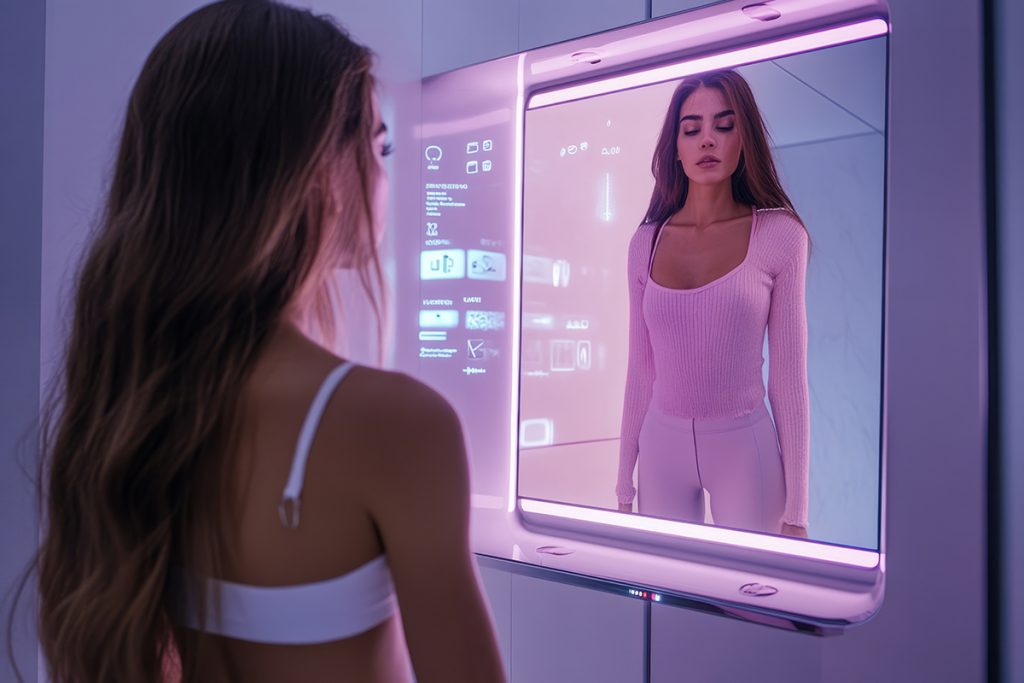
Augmented reality (AR) is a technology that overlays digital information onto the real world. Using devices such as smartphones, tablets, and AR glasses, virtual images, 3D objects, and text information can be displayed in real time on the scenery in front of you
Unlike VR (virtual reality), AR does not create a completely virtual space, but rather combines digital information with real-world scenery. This makes it seamlessly applicable to everyday life and business, and it is being adopted in a wide range of fields. In particular, it is increasingly being integrated with corporate marketing strategies and digital advertising to provide new customer experiences
For example, retailers can introduce virtual try-on services, allowing customers to check the fit of clothes without actually trying them on, and camera-based facial recognition can be used to enable more precise fitting
In the manufacturing industry, displaying AR manuals for workers contributes to improving the accuracy and efficiency of work
In recent years, filters and games that utilize smartphones, such as Pokémon GO, have become increasingly popular, making them a familiar presence in the entertainment industry
Market size and growth forecast
The AR market is expanding rapidly, with the adoption of AR technology accelerating as companies move toward digitalization.
Market research predicts that the market size for AR technology will grow significantly over the next few years, with its use in business fields expanding. The following factors are cited as behind this growth:
The spread of 5G communications
The development of a high-speed, low-latency communication environment has made it possible to display data in real time
Increasing number of high-performance smart devices
Advances in smartphones and AR glasses have made more advanced AR experiences possible
Advances in corporate digitalization
Along with business DX (digital transformation), an increasing number of companies are introducing AR to improve operations and customer experience
In particular, the retail, manufacturing, education, tourism, and entertainment industries are increasingly using AR technology to improve business efficiency and provide new customer experiences.Recently, there has been an increase in interactive AR content that uses video and images, making it possible to provide a more realistic experience even on a screen
In the future, AR will be integrated with AI technology to enable more advanced AR experiences, and real-time data analysis and personalization features will become more powerful. This will further expand the impact of AR in business and broaden the scope of its use
AR business use cases
Augmented reality (AR) creates a visual impact and is used in a variety of industries as a means to increase brand awareness and enhance marketing effectiveness. Here, we will introduce recommended ways to use AR in your business based on actual case studies provided by AR Works
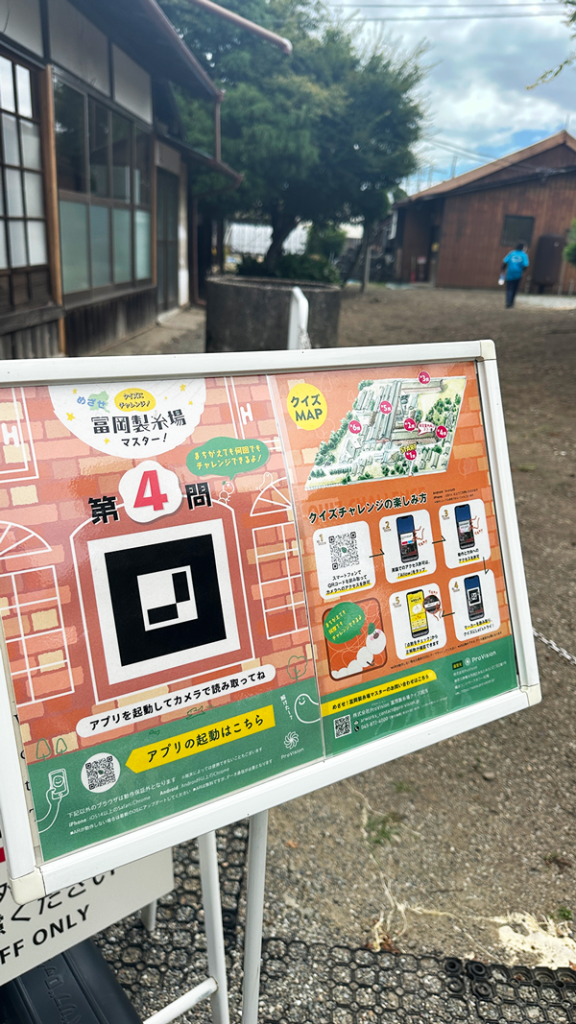
1. Tourism: Tomioka Silk Mill AR x Stamp Rally
Source: https://promotion.ar-works.jp/20241121-2/
The Tomioka Silk Mill, a World Heritage Site, has introduced an AR stamp rally in the form of a quiz. When visitors hold their smartphones over the facility, they are given a quiz at each spot, allowing them to explore the facility in a game-like manner
- Extending facility stay time and improving mobility
- Improving tourism experiences through digital content
- Use in marketing by collecting visitor data and linking surveys
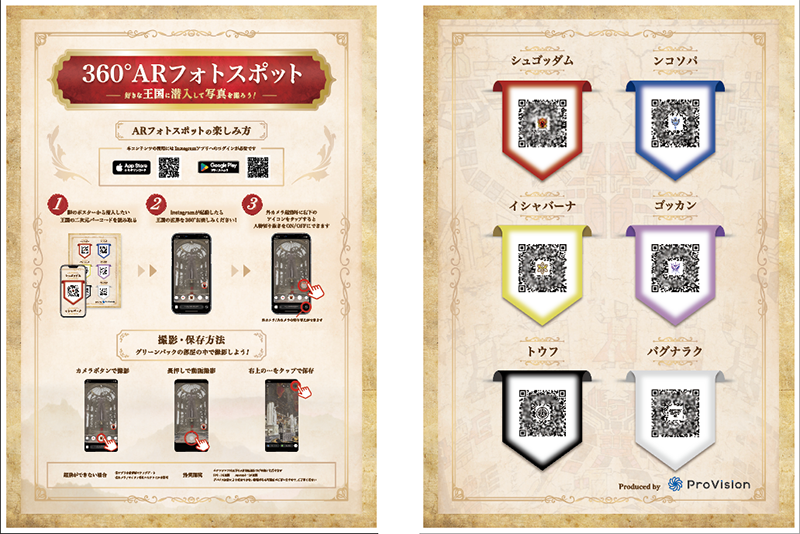
2. Entertainment Industry: Toei Promotion
Source: https://promotion.ar-works.jp/20240412-2/
Toei has introduced an AR photo spot as part of the promotion. When visitors hold their smartphones over the event venue, an AR photo frame will appear, allowing them to experience each country that appears in King Oger in 360 degrees, and visitors can enjoy sharing the photo on social media
- Increased satisfaction among event attendees
- Creating a natural word-of-mouth effect through social media
- We can provide a special experience that cannot be enjoyed at an event venue
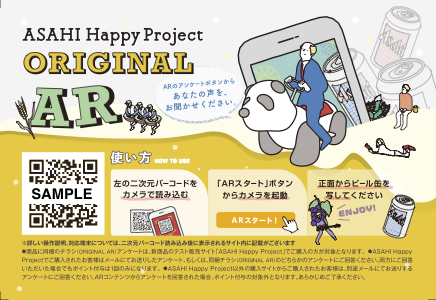
3. Beverage manufacturer: Asahi Beer survey collaboration
Source: https://promotion.ar-works.jp/20240514-2/
Asahi Breweries not only promoted its products, but also used AR to make it easier to access surveys. After consumers experienced the AR content on their smartphones, they were smoothly guided to the survey form, enabling the collection of marketing data
- Improving survey response rates through AR experiences
- Data collection in a natural way
- Deepen product understanding and contribute to improving brand image
4. Local government: Okaya City Hall uses social media to commemorate the visit

Source: https://promotion.ar-works.jp/20240604-2/
Okaya City Hall conducted a social media campaign using AR content for event attendees. Attendees experienced AR on their smartphones and took and posted commemorative photos to promote the event and the appeal of the region
- Increased satisfaction of event participants
- Strengthening regional PR through social media
- Tourism promotion using AR
Advantages and disadvantages of AR
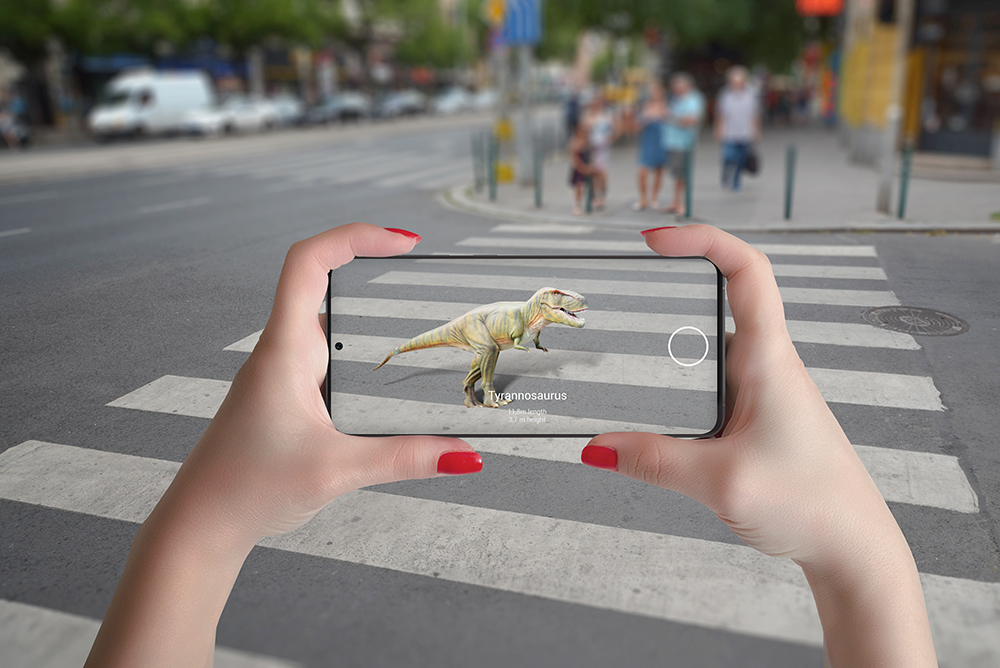
Benefits of AR
1. Improved business efficiency
In the manufacturing industry, AR manuals for workers can be used to make it easier to check procedures, reducing work errors and improving productivity. They can also be used to support remote work, enabling support even when skilled engineers are not on-site
2. Improved customer experience
In the retail industry, virtual try-on services allow customers to try on clothes at home, boosting purchasing confidence. In the tourism industry, AR navigation and the restoration of historical buildings offer new experiences for travelers
3. Strengthening marketing
AR advertising and interactive promotions allow businesses to connect with customers in new ways. AR campaigns, in particular, that integrate with social media platforms make it easier for users to share content, leading to increased brand awareness
4. Easy implementation and improved user convenience
AR can be easily experienced by users using WebAR technology, without the need to download a dedicated app or register or log in. This allows companies to implement effective AR initiatives while reducing the burden on users
Disadvantages of AR
On the other hand, introducing AR also comes with challenges such as cost and technical hurdles
1. High initial costs
Developing and implementing AR systems is costly. Creating original AR content in particular incurs high development and maintenance costs, placing a heavy burden on small and medium-sized businesses in particular. Furthermore, providing a high-quality AR experience requires the development of high-performance devices and dedicated apps, making implementation difficult
2. Hardware limitations
Currently, most AR experiences are provided through smartphones and tablets. However, these devices have the drawback of consuming a lot of battery power and are not suitable for long-term use. In addition, because users must hold the smartphone while using it, it is not suitable for continuous use in business applications
This issue is expected to improve as AR glasses become more widely used in the future, as major companies are focusing on developing AR glasses, such as Apple's "Vision Pro" and Meta's "Quest" series
In particular, progress has been made in reducing weight and improving visibility, and the ability to experience AR hands-free is expected to lead to more practical business applications
3. Handling of Personal Information
Utilizing AR technology can provide a more personalized experience by acquiring user location and behavioral data. However, due to regulations regarding the handling of personal information and the need for privacy protection measures, proper management is required
In particular, when companies collect customer data through AR, it is essential that they comply with laws such as personal information protection and the GDPR (General Data Protection Regulation). Establishing an appropriate data management system and providing transparent explanations to users is key to gaining their trust
Key points to consider when introducing AR
When introducing AR into your business, it's important to clarify your objectives and choose the right technology and partners. To be successful, you need to keep the following points in mind:
1. Clarify the purpose of implementation
Before introducing AR, it is important to clarify the problem it will be used to solve. For example, improving customer experience in the retail industry, or improving operational efficiency in the manufacturing industry. By clarifying the purpose, you can choose the appropriate way to use it
2. Choose the right technology and devices
There are various ways to experience AR depending on the device being used, including smartphone AR and AR glasses. Choosing the right device for the purpose is key to increasing its practicality. For example, AR glasses are suitable for work support, while smartphone AR is effective for marketing purposes
3. Select a development partner
AR development requires specialized skills, so collaboration with external development companies is important. In particular, choosing a partner with a track record of success in each industry will ensure a smooth implementation. By choosing a company with extensive development experience, you can create high-quality AR content while keeping costs down
4. Estimate operations and costs
Introducing AR not only requires development costs, but also operational and maintenance costs. It's important to calculate the cost-effectiveness from a long-term perspective and consider the ROI (return on investment). In particular, when using AR glasses or dedicated apps, the cost of installing and updating the devices must also be taken into account
Future outlook for AR business
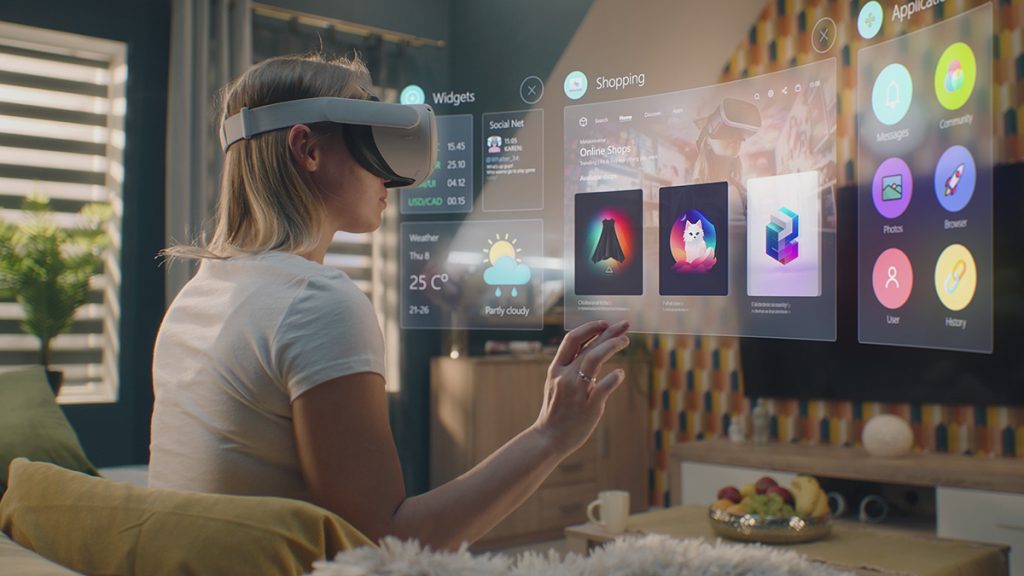
AR technology is expected to continue evolving and its use will expand in various fields of business. In particular, the spread of 5G communications and the advancement of integration with AI will significantly improve the practicality of AR, and it is predicted that more companies will consider adopting it
The evolution of 5G and AR
The widespread adoption of 5G will create a high-speed, low-latency communication environment, enabling real-time, high-definition AR experiences. For example, in remote medical care, surgical support will be more accurate, and at construction sites, workers will be able to view design data in AR in real time, improving work efficiency
Benefits of AI x AR
Combining AI technology with AR enables more advanced user experiences. For example, in the retail industry, services are being developed that use AR to suggest optimal products based on a customer's purchasing history and behavioral data. In the education sector, AI technology can also create more flexible learning environments, such as providing interactive learning materials tailored to each learner's level of understanding
The spread of AR glasses
In recent years, major companies have been developing next-generation AR glasses, such as Apple's "Vision Pro" and Meta's "Quest," resulting in the emergence of lighter, more powerful devices. This will enable a more intuitive and practical AR experience than conventional smartphone AR, and is expected to accelerate its adoption, especially in business applications
Merging with the Metaverse
AR is predicted to create even more business opportunities through its integration with the metaverse (virtual space). Companies can create new customer touchpoints through virtual shopping and online events that utilize AR. This is accelerating the movement to develop new markets without being bound by traditional marketing methods
As AR technology continues to evolve, companies are expected to explore more effective ways to utilize it and create new business opportunities. By incorporating AR appropriately, companies can provide competitive services and products and accelerate business growth
summary
In recent years, AR (Augmented Reality) has been used in a wide range of industries, including tourism, entertainment, sports, beverage manufacturers, local governments, and commercial facilities, contributing to corporate marketing, branding, and business efficiency
This article introduced specific examples such as the Tomioka Silk Mill's AR stamp rally, Toei's promotion, Tokyo Verdy's 3D mascot, and Asahi Breweries' AR x survey campaign. As these examples show, AR has both the appeal of "experiential content" and the practical aspect of utilizing data
In particular, the combination of technologies such as AR photo frames, stamp rallies, 3D content, survey integration, and location information control has produced results such as increased consumer and visitor satisfaction, longer stay times, and improved marketing effectiveness
Going forward, the spread of 5G, collaboration with AI, and the evolution of AR glasses will likely enable more realistic and sophisticated AR experiences. In particular, with advances in real-time information provision and personalization, AR will likely become increasingly common as a means of corporate promotion and business improvement
Choosing a partner with a proven track record is important when introducing AR and growing your business. Receiving appropriate implementation support and guidance will enable smooth AR utilization. If you are considering introducing or utilizing AR, please feel free to contact us for more details



![[AR experience available] The dinosaurs start moving on the spot! Examples of use of AR dinosaurs and their introduction points](https://promotion.ar-works.jp/wp-content/uploads/2025/07/icatch.jpeg)
