




AR glasses have been gaining attention in recent years, with their use expanding in business and everyday life.
Their use is expanding in a variety of fields, including entertainment, medicine, and education, and the latest models feature technological innovations that make them even easier to use, such as high-resolution displays, lightweight designs, and the use of AI.
Furthermore, because AR glasses have different uses and functions than smart glasses, it's important to understand their respective features.
This article provides a detailed explanation of the basic features and applications of AR glasses, how they differ from smart glasses, and information on the latest models coming in 2025.
Contents
- What are AR glasses?
- AR Glasses Functions and Operations
- The difference between AR glasses and other wearable devices
- Differences from other wearable devices (smartwatches, VR goggles)
- The unique value and usage scenarios of AR glasses
- How to choose AR glasses
- Summary of the latest AR glasses! Features and performance of popular models
- The latest technology behind AR glasses and its future potential
- summary
What are AR glasses?

AR glasses are cutting-edge wearable devices that overlay digital information on the real world, allowing users to enjoy new experiences.
For example, wearing AR glasses displays various information in front of your eyes, allowing you to watch videos and view images in real time using the camera. They are useful in
a variety of situations, from instantly checking tourist spot information at tourist spots to using them as a work support tool.
The latest AR glasses models feature lightweight designs and high-resolution full HD (1920 x 1080) displays. This provides clear images and a comfortable fit, further expanding their use in a variety of applications, including displaying information at tourist spots, business support, and entertainment.
Another attractive feature is the built-in camera and video playback function, allowing users to watch the content they need on the spot. This further advances the fusion of the real world and digital information, enabling new, immersive experiences not possible with conventional devices.
At the technology event CES 2025 held in Las Vegas in January 2025, AR glasses equipped with the latest technology were unveiled and attracted a great deal of attention. For example, TCL's RayNeo X3 Pro features a high-brightness display of 2,500 nits, making it suitable for outdoor use. In addition, brands such as XREAL and VITURE are also driving market growth by offering products that utilize their own unique technologies and designs
However, there are still challenges to overcome before AR glasses can become widespread, including high prices, short battery life, and stable visual effects. Meanwhile, technological innovations are underway to address these challenges, and further improvements are expected. As AR glasses continue to evolve, opportunities for their use in everyday life and work are likely to increase
AR Glasses Functions and Operations
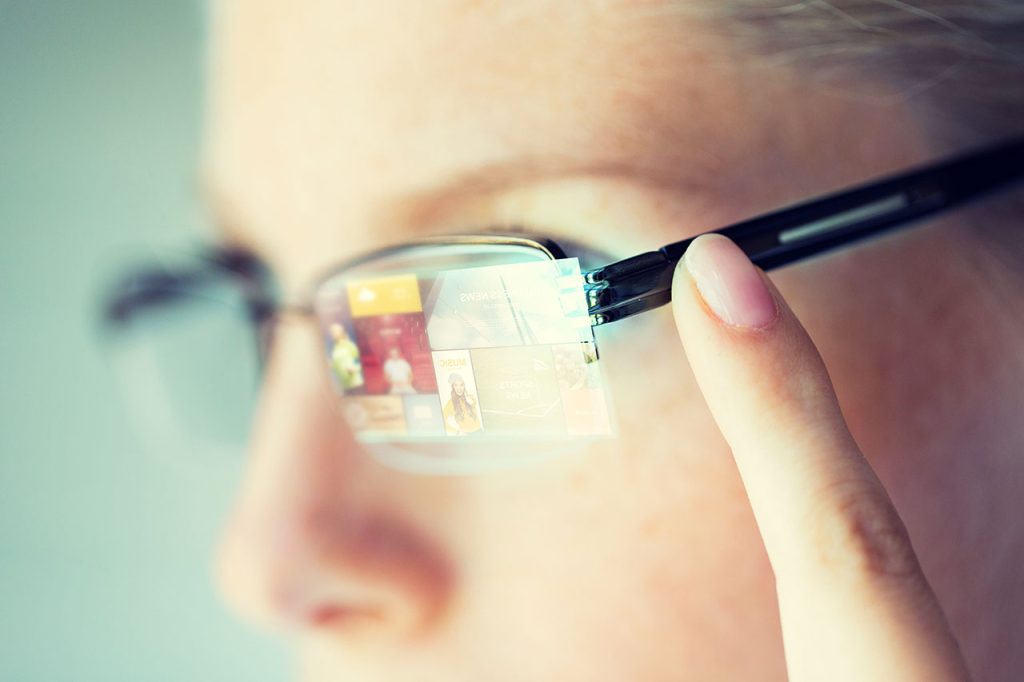
1. Diverse interfaces that enable intuitive operation
One of the attractions of AR glasses is that they have a variety of intuitive interfaces, offering a new operating experience not available with conventional devices
Voice recognition and gesture control
The gesture control function, which allows you to control the device by voice or by hand movements, is particularly useful in situations where you cannot use both hands, such as while working or driving
Eye tracking technology
This technology tracks the user's gaze and enables menu selection and scrolling, eliminating the need for button operation and allowing smooth operation with just the user's gaze
2. Functions that interact with the surrounding environment
AR glasses can obtain real-world information in real time and display the necessary data directly in the user's field of vision
Environment recognition function
The built-in camera recognizes objects and displays context-sensitive information, eliminating the need for physical manuals and guides and improving work efficiency
Real-time translation
The ability to instantly translate foreign language signs and text and display them within your field of vision is extremely useful for travelers and business users working in multilingual environments
3. Seamless integration between devices
AR glasses also have extensive connectivity features with other devices, allowing for smooth data sharing and app operation
Bluetooth and Wi-Fi connections
Easily connect to smartphones, tablets, and PCs and seamlessly use apps, improving the efficiency of document sharing and data display, especially in business situations
Integration with cloud services
Equipped with a function that allows you to instantly save and share data in the cloud, you can use the same data in real time across multiple devices
4. Designed for user comfort
The design and operability have been improved to ensure comfortable wearing even when used for long periods of time
Equipped with bone conduction speakers
If bone conduction speakers are used, which do not put strain on the ears, you can receive voice guidance and notifications without blocking out surrounding sounds
haptic feedback
The combination of vibration and haptic feedback improves the reliability of operation, reduces the risk of incorrect operation, and supports intuitive operation
5. Improved customizability
In recent years, AR glasses have also become more customizable, allowing operation to be optimized for each user
Per-app customization
You can set up an operation menu for each app, allowing you to operate efficiently according to the work content and environment
Shortcut Function
Assigning shortcuts to specific gestures or voice commands saves time and improves ease of use
The difference between AR glasses and other wearable devices
AR glasses are characterized by their technology that allows them to overlay digital information onto real space and project information directly into the field of view, while smart glasses are eyeglass-type devices that can display notifications and perform basic operations using voice commands
While AR glasses have advanced display technology that blends reality with the digital world and are often used for business or professional purposes, smart glasses are lightweight and easy to use, making them a device that enhances everyday life. By choosing the right device for your application, you can maximize the benefits of each technology
The difference between AR glasses and smart glasses
| item | AR glasses | Smart Glasses |
|---|---|---|
| Key Features | Overlaying digital information onto real space | Notifications, simple information display, voice control |
| Technical features | High-resolution displays, spatial projection, and 3D modeling | Simple display, microphone |
| User target | From professionals (architecture, medicine) to general users | Smartphone users and gadget lovers |
| Main uses | Games, entertainment, education, medical care, business support | Check notifications, simple navigation, listen to music |
| Price range | Mid to high price range (50,000 to 200,000 yen or more) | Relatively low price range (around 20,000 to 50,000 yen) |
Differences from other wearable devices (smartwatches, VR goggles)
Smartwatches are equipped with small displays and are primarily intended for health management, such as checking notifications and measuring heart rate and exercise volume. They are packed with fitness features and everyday health maintenance support, helping to improve your lifestyle. VR goggles
are devices that provide an immersive experience in a virtual space. They are primarily designed for gaming and watching movies, and their strength lies in the experience within a completely virtual environment, rather than linking with the real world.
While AR glasses have different features from other wearable devices, they have the potential to make our lives more convenient and efficient when combined with other devices
The unique value and usage scenarios of AR glasses
Increased efficiency on the job site

AR glasses are revolutionizing manufacturing and construction sites by displaying essential information within the field of view while workers are working. Workers can use both hands while projecting work manuals and blueprints in real time. Remote functionality also allows workers to receive work instructions from managers and experts in remote locations, improving productivity and reducing work errors
In the construction industry, design data for structures can be viewed virtually on-site, allowing for accurate understanding of project progress. Compared to traditional paper or tablet devices, the ability to obtain information in real time is a major advantage
Use in the medical field
In the medical field, AR glasses are being used to assist in surgery and visualize patient data. By displaying 3D scan data of the patient during surgery and checking every detail as the procedure progresses, the precision of the surgery is improved. This is particularly effective in situations that require advanced technology, such as cardiac catheterization and orthopedic surgery
In addition, medical staff can instantly check patient data, enabling them to respond quickly to emergencies, improving the quality of medical care and providing patients with peace of mind
Education and training
AR glasses are also being used as a tool to improve the quality of learning and training. Students can virtually experience historical buildings and natural environments, deepening their intuitive understanding that is not possible with traditional teaching materials. 3D topographical data is used in geography classes, and ancient castles and cityscapes are recreated in history classes, allowing for immersive learning
AR glasses are increasingly being introduced in corporate training, allowing new employees to learn through simulations of actual work tasks, allowing them to acquire skills efficiently
Streamlining remote work and meetings
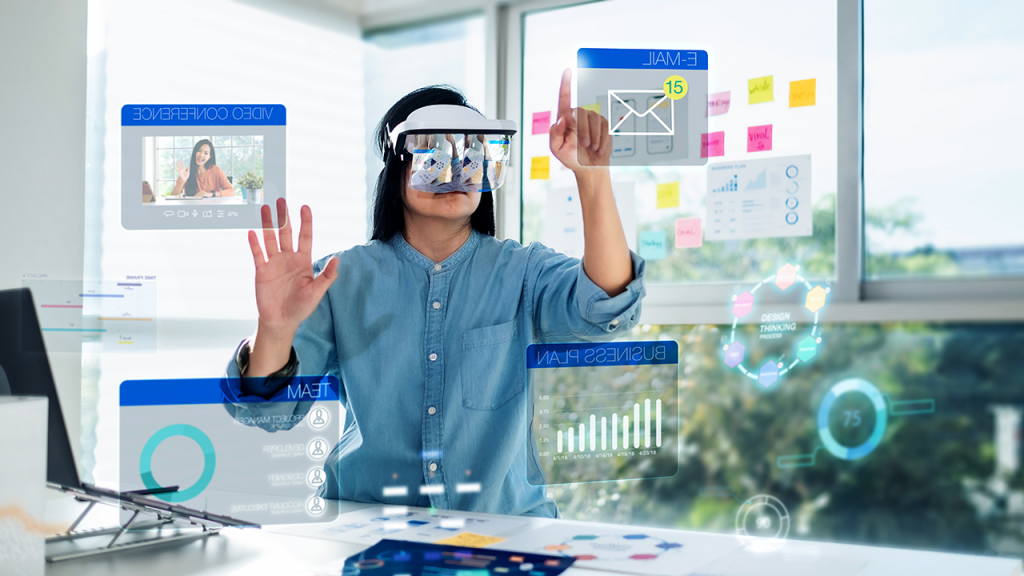
Collaboration with remote team members and experts in real time improves work and meeting efficiency. By displaying documents and blueprints within view during video calls, discussions can be carried out, facilitating smoother decision-making
Additionally, during equipment inspections and maintenance work, AR glasses can be used to share work status in real time and receive advice from remote locations, leading to improved work efficiency and reduced errors
Visual aids
AR glasses are also used as an assistive tool for the elderly and visually impaired. The magnification function makes it easier to see small text and detailed information, and the voice guidance function helps users understand their surroundings.
AR glasses have become lighter and are designed to be comfortable to wear even for long periods of time, making them more widely used in everyday life. As a result, more people can easily use the latest technology, improving the convenience of everyday life.
Entertainment use
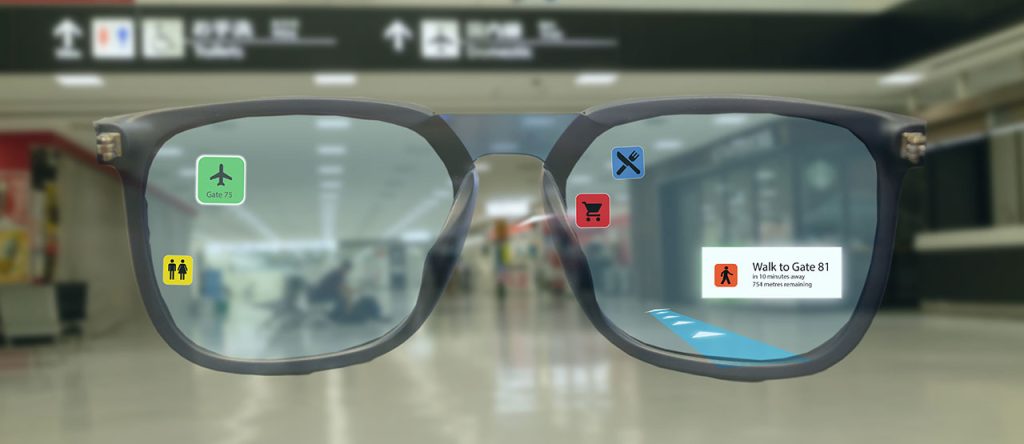
AR glasses will also offer new experiences in the entertainment field. When watching sports, player data and replay footage will be displayed in your field of vision, enabling a new way of watching the game. In games, AR glasses will enable interactive experiences that blend the real and virtual worlds, allowing for a more immersive experience
How to choose AR glasses
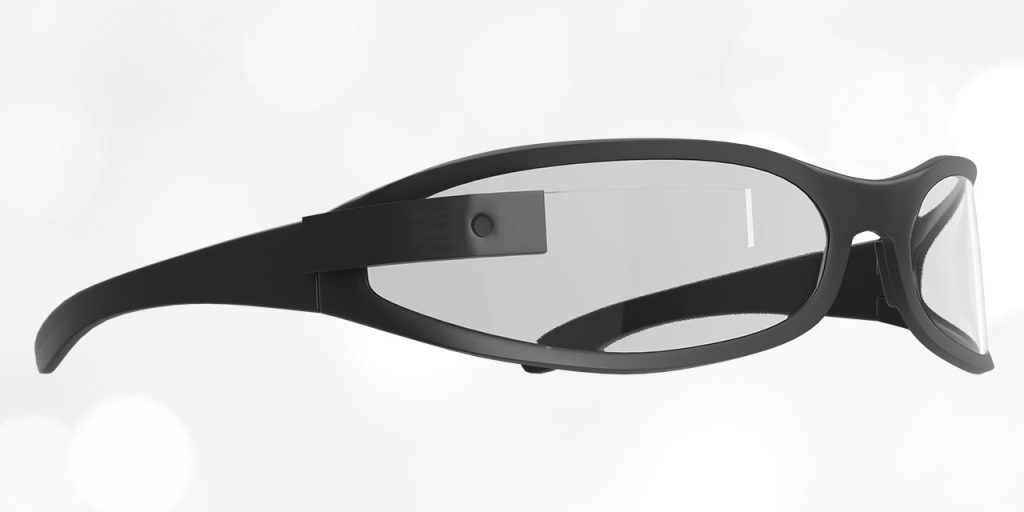
When choosing AR glasses, there are five things to consider: use, price, technical specifications, compatibility, and design. We'll explain each point in detail
1. Clarification of use
Before purchasing AR glasses, it's important to determine what you'll be using them for
- For entertainment purposes (watching videos and playing games): We recommend a model with a full HD high-resolution screen and a wide viewing angle. Some models can be connected to Steam Deck or a PC.
- Remote work/on-site work : Models equipped with cameras for environmental recognition and long-lasting batteries are ideal.
- For professional use (architecture and medical), models with enhanced augmented reality functionality that overlays information on real space are suitable.
2. Price range comparison
The price of AR glasses ranges widely, from 50,000 yen to over 200,000 yen, so choose according to your budget
- Affordable models (for entertainment): There are many reasonably priced products available for purchase on Amazon and other sites.
- High-performance model (for business and professional use): Expensive models offer high cost performance in terms of improving productivity.
3. Check the technical specifications
The performance of AR glasses directly affects the comfortable usage experience. Please pay particular attention to the following points
- Resolution and screen performance : We recommend a model with Full HD (1920 x 1080 pixels) or higher.
- Field of view (FOV) : The wider the field of view, the more immersive it is.
- Battery life and charging method : For extended use, models with USB-C ports and wireless charging are convenient.
4. Device Compatibility
Compatibility with the devices you use every day is also important
- Smartphone compatibility : Check if it is compatible with Android/iPhone.
- Connecting to PCs and game consoles : Check whether the device has an HDMI port or Bluetooth compatibility.
- Use for work : Check in advance whether it can be smoothly integrated with the devices you use for work.
5. Design and fit
Consider using it for long periods of time and choose a model that is comfortable to wear
- Lightweight design : Models weighing around 50g to 100g are less tiring to use.
- Stylish design : The stylish design, like sunglasses, makes it easy to use when you're out and about.
- Prevents sound leakage : We recommend choosing a model with soundproofing so that you can use it comfortably in public places.
When choosing AR glasses, keep these points in mind to find the model that best suits your needs
Summary of the latest AR glasses! Features and performance of popular models
*Information as of March 28, 2025
1. XREAL One
"XREAL One" provided by XREAL is the latest AR glasses equipped with the spatial computing chip "XREAL X1."
Resolution : 1080p (Full HD)
Uses : Gaming, watching movies, business use
Benefits : Enjoy a deep immersive experience with standalone 3DoF, a wide field of view, and low latency. It also works smoothly with smartphones, PCs, gaming devices, AR apps, and more, making it suitable not only for entertainment but also for business support.
2. RayNeo Air 2
The RayNeo Air 2, from TCL's RayNeo brand, is a pair of smart glasses that offers portability and a high-quality viewing experience
Display : SONY Micro OLED (organic EL)
Refresh rate : 120Hz for smooth image display
Weight : 76g (lightweight design for comfortable long-term wear)
Benefits : Built-in dual speakers for a powerful audio experience. Stylish design makes it suitable for everyday use.
3. VITURE One XR
VITURE's "VITURE One XR" is a model with outstanding acoustic performance
Uses : Gaming, watching movies.
Benefits : Clear audio experience without external speakers. Comfortable to wear for long periods of time, allowing for a more immersive entertainment experience.
4. Rocky Max
Rokid's "Rokid Max" is an entertainment-focused model, perfect for watching movies and streaming
Viewing Angle : Wide
Benefit : Adjustable lens design provides an optimal visual experience for each user.
5. MiRZA
MiRZA is a model suitable for commercial use and is increasingly being used on construction sites and in the medical field
Design : Lightweight and durable.
Benefits : Clear visual information and intuitive operability make it popular with many professionals.
Model Comparison Table
| Model name | resolution | viewing angle | weight | Purpose | Features |
|---|---|---|---|---|---|
| XREAL One | 1080p (Full HD) | wide | lightweight | Games, watching movies, business use | Enjoy an immersive experience with standalone 3DoF support. Versatile for entertainment, business, and more |
| RayNeo Air 2 | Micro LED | standard | lightweight | Watching movies, playing games, working remotely | 120Hz high refresh rate, SONY Micro OLED, built-in dual speakers |
| VITURE One XR | 1080p (Full HD) | standard | lightweight | Games, watching movies | High quality sound, no external speakers required |
| Rocky Max | High resolution | wide | lightweight | Watching movies, streaming | Adjustable lenses for an individually optimized visual experience |
| MiRZA | High resolution | standard | Medium weight | Business (architecture, medical) | Durable and clear visual information for professionals |
The latest technology behind AR glasses and its future potential

Evolution of display technology
Recent AR glasses use micro LED or OLED screens, which offer higher resolutions (full HD or higher) and higher brightness, allowing for clearer images. Models with a 120Hz refresh rate in particular offer smoother image movement and a more comfortable viewing experience. This allows for clearer images both indoors and outdoors, and significantly improves visibility
In addition, technological development of holographic displays is also progressing, and once they are put into practical use, it is expected that more realistic and immersive AR experiences will become possible
Integration of processors and AI
The latest AR glasses have significantly improved built-in processor performance, enabling real-time data processing. In addition, by linking with AI technology, they can analyze user behavior and gaze and provide optimal content and information
For example, when shopping, detailed information about the product you want will be automatically displayed, and in healthcare, advice will be provided based on the user's health status. By utilizing this technology, navigation will become more intuitive, allowing you to instantly check the information you need even when working remotely
Evolution of communication technology
With the widespread adoption of 5G networks, AR glasses can now enjoy faster and more stable internet connections, allowing cloud-based apps and video streaming to run smoothly and even playing large amounts of video content in real time
It can also be used for remote work and online meetings, allowing you to work more smoothly while sharing information with people in different locations. Furthermore, models with wireless connections and HDMI ports can easily be connected to PCs and monitors, making them ideal for business situations
Future possibilities
In the future, AR glasses will become even lighter and have longer battery life, so designs that are comfortable to wear for long periods of time are likely to become mainstream. In particular, by linking them with smart homes and IoT devices, operating home appliances and managing your health will become more intuitive.
For example, the future may not be so far off, where you can operate smart speakers and TVs using only your voice and project information into your field of vision.
In the medical field, development is progressing on systems that use AR glasses for remote surgery and share patient status in real time, while in the education field, virtual classrooms and 3D simulations will become more widespread, providing more practical experiences
In this way, AR glasses are likely to become a useful device not only for doctors and educators, but also for students and ordinary households
summary

As AR glasses become lighter, have longer battery life, and are more easily integrated with smart homes and IoT devices, they will likely become an indispensable tool in our daily lives
If you're thinking about getting AR glasses, choose a model that suits your needs and budget, and find the best way to use them. Be sure to try out these ever-evolving AR glasses!
If you would like to know more about the differences between VR, MR, XR, etc., please see the following column



![[AR experience available] The dinosaurs start moving on the spot! Examples of use of AR dinosaurs and their introduction points](https://promotion.ar-works.jp/wp-content/uploads/2025/07/icatch.jpeg)
