




Contents
- What is AR (Augmented Reality)?
- The differences between AR, VR (Virtual Reality), MR (Mixed Reality), and XR (Cross Reality)
- AR mechanism and technology
- Tools and types required to experience AR
- Benefits and uses of AR in business situations
- AR use cases
- What is AR (Augmented Reality)? Summary
- Leave the implementation of AR to AR Works
What is AR (Augmented Reality)?
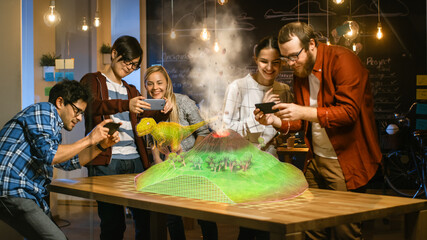
AR (Augmented Reality) is a technology that overlays digital information and content onto the real world. Using a smartphone, tablet, or dedicated AR device, it is possible to overlay virtual images, videos, audio, text, and more onto real-world scenery.
Typical examples include the smartphone games "Pokémon GO" and "Pikmin Bloom." These games make it seem as if fictional characters have appeared in the real world, providing a new experience through AR.
This article explains how AR is being used in a variety of other fields, including how the technology works and the latest examples.
The evolution of AR
The technology underlying AR emerged in the 1960s, while the concept of AR was born in the 1990s. It wasn't until advances in camera and AI technology, along with the widespread use of smartphones, that the technology began to see widespread adoption and adoption. The diversification of devices, such as smart glasses and AR headsets, also contributed to its popularity. While early AR focused on simple display methods using smartphone cameras, the technology has evolved significantly in recent years. It is now being used in a wide range of industrial fields, including education, manufacturing, medicine, and entertainment, and is attracting attention as a core technology for the next generation
AR features
As the term "augmented reality" suggests, it is a technology that overlays digital content onto the real-world scenery and objects we see. For example, by looking through a smartphone camera, directions can be displayed on a streetscape, or digital descriptions can appear on products. In this way, AR's unique feature is that it allows us to experience digital information in a way that blends naturally into our daily lives
Another feature is that it can be experienced on a variety of devices. It is compatible with smartphones, smart glasses, tablets, etc., and there is also Web AR, which allows you to easily use AR on your browser without downloading a dedicated app
The differences between AR, VR (Virtual Reality), MR (Mixed Reality), and XR (Cross Reality)
Technologies that bring the digital world to life include AR (Augmented Reality), VR (Virtual Reality), and MR (Mixed Reality).
Each technology is innovative and allows for a real-time experience that blends reality and virtuality. At first glance, they all seem similar, but each has its own unique characteristics.
What is VR (Virtual Reality)?
VR (Virtual Reality) is a technology that allows you to immerse yourself in a virtual space that is not real. Unlike AR, which is based on the real world, VR completely blocks out the real world through a dedicated headset, stimulating the five senses, primarily sight and hearing, to create an immersive experience and allow you to experience a new world
The greatest feature of VR is that it frees us from the constraints of reality.
For example, in a virtual space, we can fly in the sky or walk on the ocean floor, which are actions that are not possible in reality. In this way, VR can be said to be a technology that greatly expands the possibilities of our experiences.
Examples of VR used in various fields
VR games (Beat Saber, BIOHAZARD 7 resident evil)
A famous game using VR technology is "Beat Saber." In this game, you use a glowing sword to slash cubes that fly in time with the rhythm. Even if you don't actually have a sword, you can enjoy the game by using VR technology to feel as if you are holding one
VR technology is also used in the famous horror game BIOHAZARD. BIOHAZARD 7 Resident Evil, one of the series, can be played in VR, allowing you to feel intense fear. The subtle details that can only be felt by wearing a VR headset further enhance the sense of realism
Source: Beat Saber – VR rhythm game
Source: CAPCOM: Resident Evil 7 biohazard official website
Flight training flight simulator
Before the introduction of flight simulators for flight training, training was done through actual aircraft or classroom learning. While these training methods have their advantages, they also have disadvantages, such as high costs and the risk of mistakes during training leading to accidents. With the spread of VR, flight simulators have made it possible to train for dangerous scenarios such as emergencies and bad weather conditions
Architecture
The use of VR in the construction industry is rapidly increasing. It is used during design to visualize 3D models in real space to make design confirmation easier, and at construction sites to compare design data with the actual structure to improve work accuracy. It can also be used to remotely supervise multiple sites and grasp on-site conditions
What is MR (Mixed Reality)?
MR (Mixed Reality) is a technology that combines the real world with the virtual world. Put simply, it's a technology that lies somewhere between AR and VR, and its unique feature is that it not only adds virtual elements to the real world, but also allows them to interact with reality.
For example, a digitally created cup appears to be placed on a real table, and as the user moves, the cup moves accordingly. This technology uses cameras and sensors to recognize the real environment and blends digital elements into it naturally.
Digital images and objects can also move and change in response to changes in the real space and the placement of objects.
MR examples used in various fields
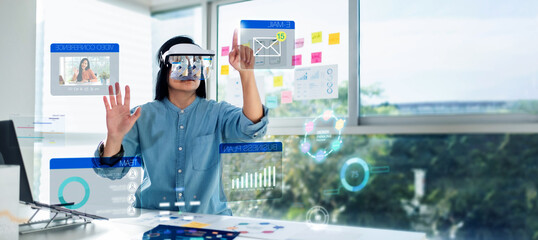
Microsoft's HoloLens
Window's holographic technology allows users to display 3D images that appear as real objects on a real screen, which can then be freely moved and manipulated. It
is used in a variety of fields, including architecture, manufacturing, medicine, education, and training. However, there are several challenges, such as the high cost of the device and the need for a complex development environment. Furthermore, the glasses require skill from the user, and the glasses can be uncomfortable to wear and have poor battery life over long periods of use, limiting their widespread adoption.
Source: Microsoft HoloLens | Mixed reality technology for business
Medical field

Recently, MR technology has been used to prepare for and simulate surgery, and to insert instruments into a patient's body to check organs.
With the development of MR, the precision of surgery has increased, making it possible to successfully perform surgeries that were previously impossible.
This is a prime example of how scientific advances are contributing to human health.
What is XR (Extended Reality)?
XR (Extended Reality) is a general term for technologies that combine reality and virtuality, such as VR (Virtual Reality), AR (Augmented Reality), and MR (Mixed Reality). The word "extended" means "unknown possibilities" or "expansion," and represents the wide range of possibilities these technologies offer
AR mechanism and technology
We will explain location-based AR and marker AR, which are typical implementation methods of AR
Location-based
Location-based AR is a type of AR that uses GPS. It determines location information using location information, direction, and the angle of the smartphone.
It works in conjunction with the GPS function that identifies the current location on the mobile device, and the AR will not be displayed even if you scan a QR code outside the set area.
Location-based AR examples
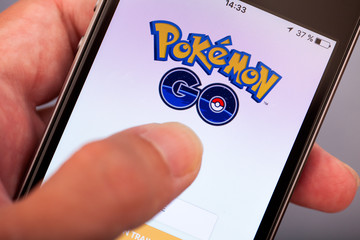
Pokémon GO
"Pokémon GO" is a popular game that has become a worldwide hit.
When you start the game and walk around town, Pokémon will appear. Pokémon will appear on your smartphone screen as if they were in the real world, and you can catch them by throwing a Poké Ball.
Source: "Pokémon GO" official website
Pikmin Bloom:
As players walk in the real world, they can perform actions in the game, such as planting flowers and raising Pikmin.
Users can raise Pikmin by walking and interacting with them in various ways. Depending on location information, some items can only be obtained in certain areas.
Source: Pikmin Bloom – Going out with Pikmin
Technical cooperation for Yorunoyo "PreCure AR Photo Rally"
A PreCure AR Photo Rally was held at the "Yorunoyo 2023" event held in Yokohama.
Different PreCure characters appeared at each location, and it was an event where you could enjoy collecting PreCure characters while traveling around the city of Yokohama.
source:
marker
AR markers are a technology that positions virtual objects based on specific patterns or images (markers) recognized by a camera.
The markers allow AR to place digital content in the correct position in the real world.
They are primarily used in advertising and marketing activities, providing engaging experiences in a variety of fields. They are also used in education, where markers can be used to display additional information about a specific object or subject.
AR marker example
Business Card AR
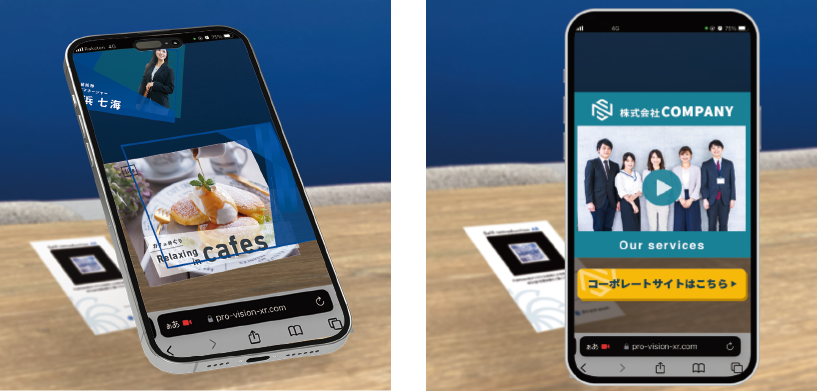
By adding AR functionality to your business card, you can create a more memorable self-introduction than with a regular business card.
In addition to business cards, you can also use it in catalogs, flyers, etc. to introduce product features and usage images with animations and videos.
The advantage is that it can convey information that is difficult to convey with text alone.
L'Oreal
is using AR technology to provide a virtual makeup experience. It
uses a smartphone camera to recognize faces, superimposes specific AR markers onto the face, and allows users to virtually try on makeup products. This
increases consumer convenience by eliminating the need to try on makeup in real life.
Tools and types required to experience AR
To experience AR, you need a device and an app. Dedicated app formats are well known, but recently, Web AR and Touch AR, which allow for easy AR use, have also been gaining attention
AR app
AR apps are a basic form of technology that is installed on compatible devices.
Because they operate on an app, they often require advanced graphics and processing power. Many AR apps have been created for educational purposes, helping to visualize complex concepts. The downside is that they require the user to install the app, which can lead to users abandoning the app at this stage. Furthermore, developing an AR app can be costly and time-consuming, as it requires implementing complex features and testing on a variety of devices.
Web AR
Web AR (Web-based Augmented Reality) is a technology that allows you to experience AR through a web browser without installing an app. All you need to do is access a specific website, so there is no need to install a dedicated app. It is highly convenient for users and is compatible with various platforms
Web AR runs through a web browser, so it requires tools and frameworks. The main languages and tools used are HTML, JavaScript, WebGL, and WebRTC. While these lower the development barrier compared to other AR developments, performance tends to be more limited than app-based AR. However, its advantages include the ability to experience it immediately in a browser, lower costs compared to AR apps, and a shorter development cycle
Touch AR
Touch AR is a new type of AR that can be activated simply by touching a smartphone. By embedding an NFC chip (tag) in the product, AR can be activated without the need for a marker or QR code. This makes it possible to create products and goods that do not compromise the design. It can
be made from a variety of materials, from acrylic stands to key chains, cards, and stickers. Like Web AR, it has the advantage of being easy for users to use as it does not require the installation of an app.
Benefits and uses of AR in business situations
AR is also increasingly being used in business settings. It is not just for improving user experience, but is also being used in employee training, work efficiency, and product design. Its use cases are diverse, and the following benefits can be expected:
Differentiating yourself from other companies using AR
Adding AR elements to existing content creates novelty and differentiates your company from competitors.
Providing an AR environment for trying out products can alleviate pre-purchase anxiety, and its uniqueness and entertainment value increases the likelihood that the AR experience will actually lead to a purchase. AR also has the effect of strengthening connections with users because it is a two-way interaction. Customers become more actively involved with the product, which deepens their interest in the brand.
Data collection and utilization via AR content
By utilizing location information and linking it with tracking functions, it becomes possible to collect and utilize data that cannot be obtained through analog media
Improving the usability of existing content
It can be difficult to display large-scale products or buildings in real life. Even if you want to convey the merits of the actual product, 2D photos and text alone may not fully convey the message. However, AR technology can be used to represent objects in 3D, allowing users to virtually experience the three-dimensional image of the product.
In addition, converting analog content into AR has various benefits in terms of convenience, such as increased portability, the ability to be replicated, and the fact that it does not deteriorate.
Increased brand loyalty
The immersive and interactive elements of XR can leave a lasting impression on customers and increase brand loyalty.
AR is also said to be 70% more memorable than non-AR experiences, making it possible to provide unforgettable experiences.
Promote social media sharing and increase awareness
Advertisements using AR are more likely to leave a lasting impression, and compared to regular advertisements, the visual presentation makes customers want to share it with others.
The novelty of the latest technology can generate buzz, which can help increase awareness among potential customers and encourage sharing on social media.
In addition, because it is easy to make a visual impact, it is possible to reach many people at once at outdoor events and large facilities.
AR use cases
AR technology is evolving daily across a variety of industries, including business, tourism, entertainment, and education. Companies and local governments can use AR to increase brand awareness and efficiently communicate information to users. We will introduce specific examples of how AR is actually spreading around us
Game example: "Dragon Quest Walk"
A typical example of a successful game that utilizes AR is "Dragon Quest Walk," developed by Square Enix.
In AR mode, familiar monsters such as slimes and Drakys can be displayed in the real world via a smartphone.
This seamlessly combines real-world scenery with the fantasy of the game.
Additionally, the in-game field map is based on a real-world map, with nearby landmarks and tourist spots being used as in-game spots.
Source: Dragon Quest Walk
Furniture example "Nitori"
AR is also being used in the furniture industry. By installing the "NITORI AR app," you can virtually place the furniture you want to buy in your room. This is useful when considering a purchase, as you can check whether the furniture's size, color, and atmosphere will fit into your actual space. While in the past, you had to go to the store to check products, now you can easily compare them from home. This reduces the risk of product exchanges and returns, and also increases consumer satisfaction.
The use of AR in this way is gaining attention as a way to solve the challenges of online shopping.
Source: [Nitori] NITORI AR Furniture Trial Storage
Character example "Shirotan"
An example of AR character promotion is "Shirotan" provided by AR Works. By converting a 2D character into 3D AR and promoting it so that users can take photos and videos of the character, you can increase the entertainment value while aiming for spread on social media.
In particular, by offering events where fans can experience AR versions of popular anime characters, you can increase fan engagement.
This type of AR promotion improves brand image and also leads to increased attendance at events.
source:
Advertising example: "Pepsi"
AR is also widely used in advertising. One example is Pepsi. Pepsi used AR on bus stop monitors for its Pepsi Max campaign in London. The monitors, which used AR technology, displayed images of aliens and robots, and instantly transformed the cityscape into another world. The
real-time changes on the monitors piqued the interest of people at the bus stops. This was not just a visual surprise; it became a hot topic on social media, making it a highly effective ad. This is because it not only promoted a product, but also provided an interactive experience. This AR was widely shared online in photos and videos, helping to raise awareness of Pepsi.
Source: Pepsi
Tourism example: "AR stamp rally"
Markers have been placed at seven locations within Daiba Park: the remains of the jin'ya (camp), gunpowder storehouse, hearth, battery, wharf, the Sixth Battery, and stone walls. By scanning the marker with a smartphone, the history of the historical site is displayed and you can collect stamps. If you collect all seven stamps, you will receive a commemorative gift.
There is no need to install a dedicated app, so anyone can easily access the site. Using AR technology in the digital stamp rally motivates participants to visit all the spots. It is also easy to share on social media, so the promotional effect can continue even after the event has ended.
source:
Educational example: "Mitsubishi Heavy Industries"
The manufacturing industry is actively adopting AR. From employee training to efficiency improvements, remote support, and product design, AR is improving operational efficiency and delivering results in each process.
AR is particularly used as an educational tool, work instructions, and maintenance support, making it a key technology in the manufacturing industry.
Mitsubishi Heavy Industries uses AR to visually communicate work procedures, increasing work efficiency. It also helps reduce errors by allowing workers to quickly access information.
Source: Mitsubishi Heavy Industries | AI and DX
What is AR (Augmented Reality)? Summary

Augmented reality (AR) is a revolutionary technology that blends the real world with digital content to create new experiences.
This article provides a comprehensive explanation of AR, from the basics to how it works, how it differs from other technologies, and use cases. AR is used in many fields, including games, advertising, and manufacturing, and also contributes to differentiation and efficiency in business.
As technology continues to evolve, AR will likely be used in more and more fields, bringing greater convenience and creativity to our lives and work. When considering implementing AR, the key to success is to partner with a company with specialized expertise and find effective ways to use it.
Why not take the first step toward maximizing the potential of AR and providing new value?
Leave the implementation of AR to AR Works

AR Works supports promotion, customer acquisition, and branding for businesses and stores through innovative AR solutions.
We provide one-stop services that meet a wide range of needs, including events to liven up the atmosphere, experiential content to enhance products, and original projects to support the revitalization of tourist destinations and local areas.
For more information, please visit the AR Works service site
Related useful materials can be found here
Introducing AR Works achievements
Please see below for examples of projects created with AR Works. We introduce a variety of scenarios, including promotions, events, and customer awareness, so please take a look
▼List of achievements | AR Works
https://promotion.ar-works.jp/achievement


![[AR experience available] The dinosaurs start moving on the spot! Examples of use of AR dinosaurs and their introduction points](https://promotion.ar-works.jp/wp-content/uploads/2025/07/icatch.jpeg)
